Symptom Explainers
Knee Pain After Sitting: Why Getting Up Hurts and What It Means
Knee pain when you rise after sitting — the classic 'moviegoer's sign' — usually traces to the kneecap and its cartilage (patellofemoral pain) or early arthritis-related stiffness. Prolonged bent-knee sitting compresses the kneecap and lets everything stiffen; the first steps expose it. It's addressable — and it's also worth reading as an early message.
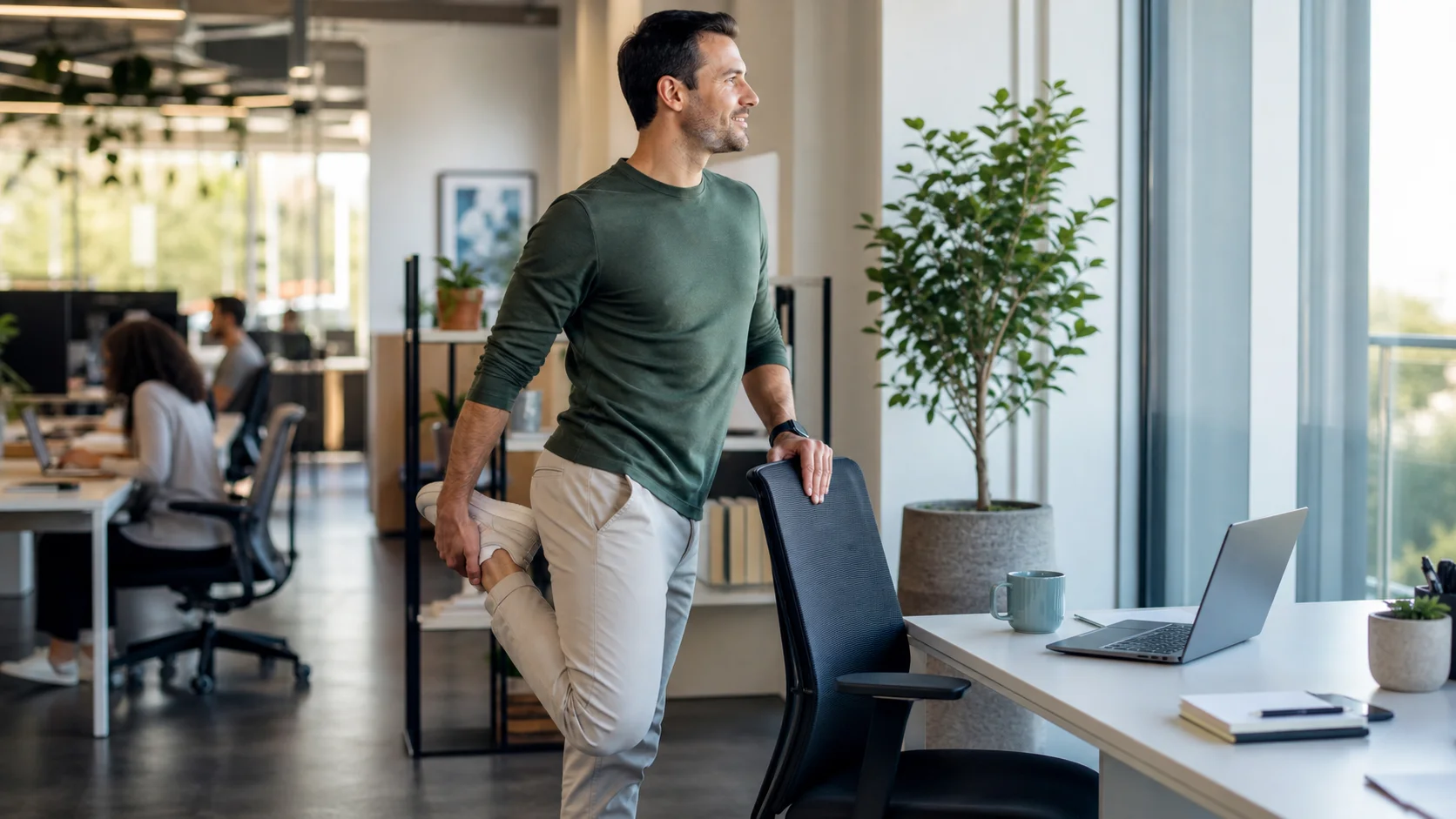
You sit through a movie, a meeting, or a long drive — and your knees file a complaint the moment you stand. Those first steps feel eighty years old; twenty steps later you’re fine. Clinicians know this pattern so well it has a name: the moviegoer’s sign. Here’s what it’s telling you.
Why sitting sets it up
Sitting bends the knee and holds it there, which does two things. First, it presses the kneecap against the thigh bone for the duration — modest pressure, but sustained for hours. Second, everything stiffens in stillness: the joint’s fluid stops circulating, and the quadriceps and surrounding tissue settle into the shortened position. Standing asks a compressed, stiffened system to take full body weight instantly. The complaint is the transition, not the standing.
The usual suspects
The kneecap and its cartilage lead the list — patellofemoral pain and cartilage softening behind the kneecap classically produce sitting-then-standing pain, often alongside pain going down stairs (the same joint surfaces under load). Hip and quad weakness are frequent hidden drivers.
Early arthritis stiffness is the other classic: a joint that gels during stillness and loosens with motion. Brief post-sitting stiffness that fades within minutes is typical; stiffness that lingers, recurs daily, or brings swelling after activity deserves more attention — these are exactly the early signs worth catching.
What helps, starting today
- Break up the stillness — a position change or thirty seconds of standing every half hour keeps the kneecap from marinating under pressure.
- Uncompress while you sit — extend the legs periodically; a straighter knee is a happier kneecap.
- Prime before you rise — a few gentle knee extensions before standing turn the cold-start into a warm one.
- Build the protection — progressive quadriceps and hip strengthening is the long-term fix; strong muscles absorb what stiff joints otherwise take.
Reading it as a message
Post-sitting knee pain is rarely an emergency — and rarely random. It’s usually a capacity gap announcing itself early, when it’s most fixable. If the pattern is new, worsening, or now includes swelling, locking, or giving way, a structured, provider-led evaluation identifies the actual driver and builds the plan — start with the full knee pain guide, or find a center and get it looked at properly.
Ready for an honest answer?
Start with a provider-led evaluation and candidacy screening — and a plain answer about whether our options fit your situation.