Soft-Tissue Injuries: Tendons, Ligaments, and Recovery
Tendon and ligament injuries heal slowly because these tissues have limited blood supply. This guide explains common soft-tissue injuries, typical recovery expectations, and how a provider-led evaluation clarifies whether conservative, clinician-guided options may support your recovery process.
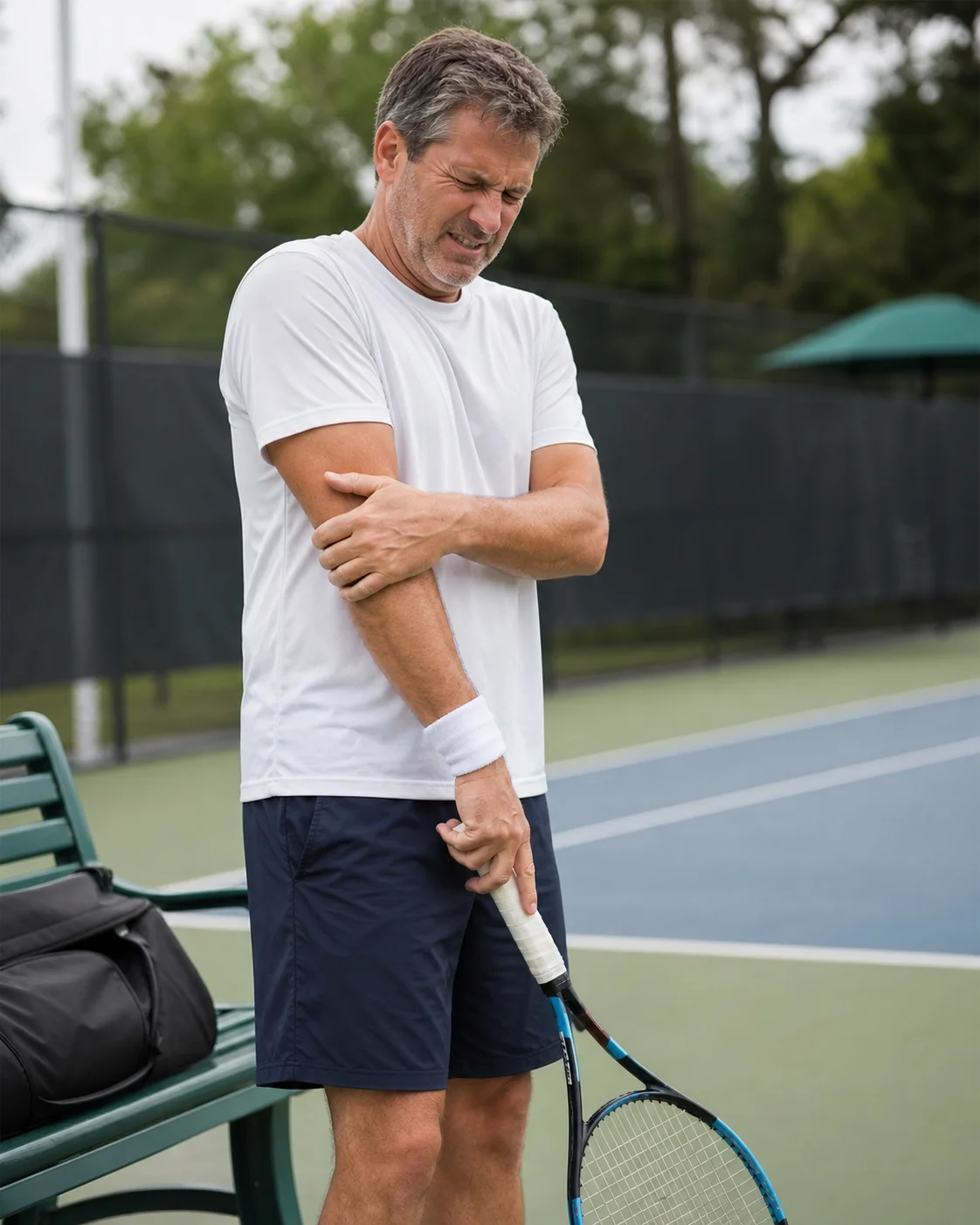
Why do tendons and ligaments heal so slowly?
Compared with muscle, tendons and ligaments have limited blood supply, so their repair processes run on a slower clock — often months rather than weeks. This is why a tendon problem that gets two weeks of rest and then a full return to activity so often becomes a recurring problem: the tissue was calmer, not remodeled.
What are the most common soft-tissue injuries?
Tendinopathies lead the list: tennis and golfer’s elbow, Achilles and patellar tendinopathy, rotator cuff and gluteal tendinopathy. Ligament sprains — ankles above all — and muscle strains round it out. Most share a pattern: pain with loading, temporary relief with rest, and return of pain when normal activity resumes too quickly.
What does good conservative care look like?
Progressive loading is the cornerstone: gradually strengthening the tissue with structured, increasing demand rather than resting it into weakness. Add sensible activity modification during the sensitive phase and patience calibrated to tendon timelines, and most soft-tissue injuries improve. The commonest failure isn’t the wrong exercise — it’s quitting the plan three weeks into a three-month process.
What does a Regenerate Wellness evaluation involve?
Your provider identifies which tissue is actually involved and where it sits in the recovery process, then maps what structured care has and hasn’t been tried. The candidacy conversation is candid: whether a personalized restorative protocol fits alongside a progressive strengthening program — or whether that strengthening work, done properly and given enough time, is the missing piece.
Specific soft-tissue injuries questions, answered
Why Tendons Heal So Slowly — and How to Work With Their Timeline
Tendons heal on a slower clock than muscle or skin because they have sparse blood supply and slow cell turnover. Recovery is measu…
Why Tennis Elbow Keeps Coming Back (and How to End the Cycle)
Tennis elbow recurs because rest calms the pain without rebuilding the tendon’s capacity — so normal life re-overloads it on repea…
Soft-Tissue Injuries: honest answers
Should I rest a tendon injury completely?
Usually not. Complete rest tends to weaken tendon tissue further. Most tendinopathies respond best to progressive, structured loading guided by tolerance — an evaluation helps calibrate that starting point.
How long does a tendon injury take to improve?
Think in months, not weeks — commonly two to six months of consistent, progressive work depending on the tendon and how long the problem has existed. Slow improvement is normal; no improvement over many weeks is a reason to re-evaluate.
Why does my injury keep coming back?
Recurrence usually means the tissue calmed down but was never rebuilt to handle your activity. A structured evaluation looks at the whole loading picture — strength, mechanics, activity pattern — not just the sore spot.

Wondering about your options?
A provider-led evaluation is the honest way to find out which conservative, non-surgical options may fit your situation — and whether you’re a candidate at all.