Hip Pain in Women: Why It’s Different and Often Misdiagnosed
Women experience certain hip problems far more often than men — especially gluteal tendinopathy, the outer-hip pain long mislabeled “bursitis,” which peaks around menopause. Anatomy, hormonal change, and tendon biology all contribute, and the right diagnosis changes the treatment entirely.
The outer-hip pain epidemic nobody names
Pain on the outside of the hip — worse lying on that side, climbing stairs, or standing on one leg — is most often gluteal tendinopathy: irritation of the tendons that stabilize the pelvis. It affects up to one in four women over fifty and was called “trochanteric bursitis” for decades, though the tendons, not the bursa, are usually the story. The label matters because rest alone rarely fixes a tendon problem.
Why women, and why around menopause
A wider pelvis changes the angle at which the gluteal tendons wrap the hip, concentrating load. Declining estrogen around menopause affects tendon structure and repair. Add life phases that interrupt strength training, and the tendons’ capacity can dip just as demands stay high. None of this is inevitable — tendons respond to well-dosed loading at every age.
Getting the right diagnosis and plan
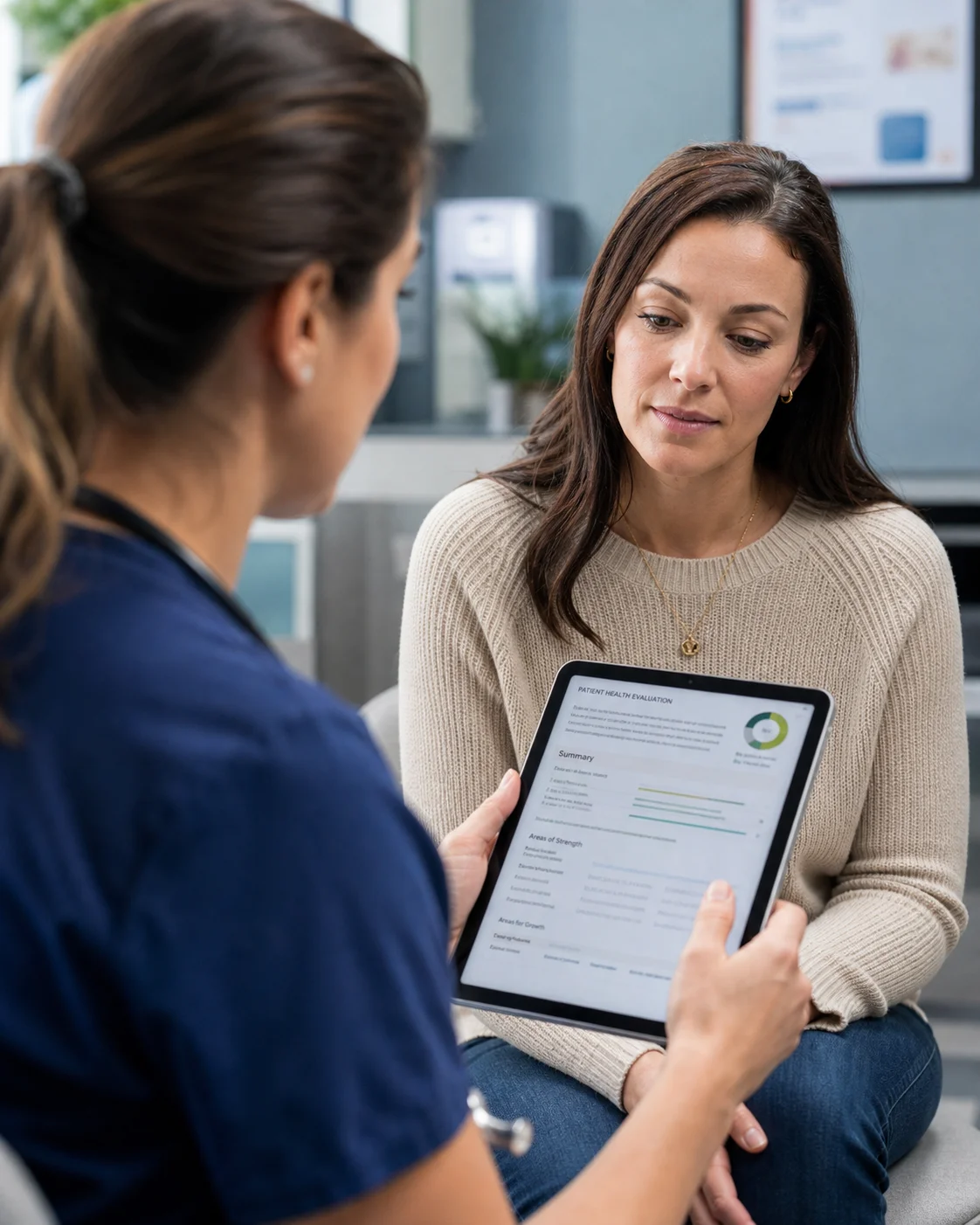
A provider-led evaluation distinguishes gluteal tendinopathy from true joint pain (usually felt in the groin), back-referred pain, and less common causes. The core of care is progressive strengthening of the hip stabilizers plus habit changes — avoiding leg-crossing and hip-hanging postures that compress the tendons. Candidacy screening then determines honestly whether a personalized restorative protocol fits alongside that foundation.
This guide is part of our hip pain education hub — the full guide covers causes, well-supported conservative measures, and what an honest, provider-led evaluation involves.
Hip Pain in Women: quick answers
Why does lying on my side hurt so much?
Side-lying compresses the gluteal tendons directly between bone and mattress. A pillow between the knees and avoiding the affected side reduce compression while care builds tendon capacity.
Is groin pain also “hip pain in women”?
Groin pain points to the hip joint itself — arthritis or labral irritation — which is a different problem from outer-hip tendon pain. An exam separates them reliably, and the plans differ.
Get an honest answer about your hip pain
A provider-led evaluation identifies the actual source and tells you plainly which conservative, non-surgical options fit — and whether you’re a candidate at all.